

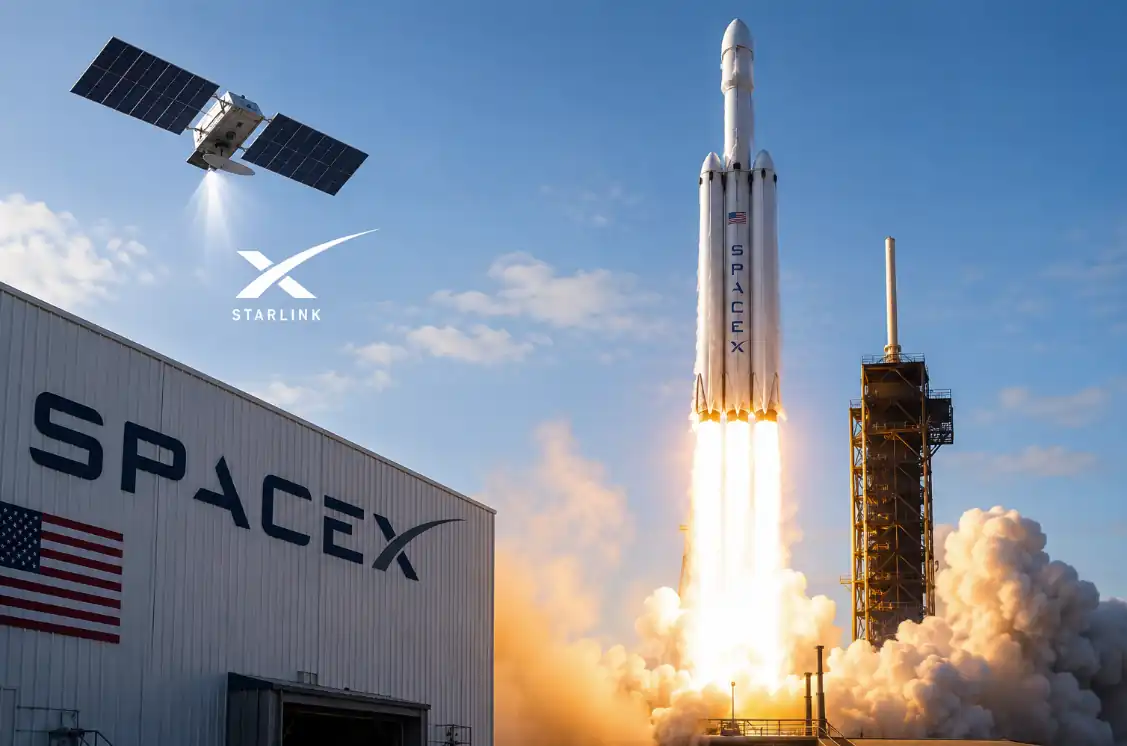
SpaceX Is Quietly Becoming One of the Most Important Pieces of Global Critical Infrastructure
When most people hear the name SpaceX, they think of rocket launches, Mars missions and Elon Musk’s ambitious vision of making humanity a multiplanetary species. For many cybersecurity leaders, the company remains a fascinating space exploration story that sits far outside their daily responsibilities.
That perception may soon become a strategic mistake.
Over the past decade, SpaceX has evolved from a commercial launch provider into something far more significant. Through Starlink, satellite communications, defense partnerships and emerging AI-driven infrastructure, the company is positioning itself at the center of a new digital ecosystem that could influence global communications, national security and business resilience for decades to come.
For CISOs, the rise of SpaceX is not a story about rockets. It is a story about critical infrastructure.
The cybersecurity community has spent years adapting to the reality that organizations increasingly depend on cloud providers. A decade ago, few companies fully understood how much of their business would eventually rely on platforms operated by a handful of technology giants. Today, a disruption affecting a major cloud provider can impact thousands of organizations within minutes.
A similar transformation is now taking place in the communications sector.
Starlink has grown into the world’s largest satellite constellation, providing connectivity across continents, oceans, remote industrial sites and regions affected by natural disasters or geopolitical conflicts. What began as an innovative solution for underserved areas is rapidly becoming a strategic communication platform with global reach.
The implications extend far beyond internet access.
As organizations continue to digitalize operations, communication networks have become as important as electricity and water. Manufacturing plants, logistics providers, healthcare organizations, energy companies and government agencies increasingly depend on uninterrupted connectivity. Every disruption creates operational risk, financial losses and, in some cases, safety concerns.
This is where SpaceX enters the cybersecurity conversation.
Many organizations have invested heavily in backup data centers, redundant cloud environments and disaster recovery capabilities. Yet communication resilience often remains overlooked. Fiber networks can be damaged. Internet service providers can suffer outages. Cyberattacks against telecommunications companies can disrupt entire regions. Geopolitical events can suddenly affect terrestrial infrastructure.
Satellite communications introduce a new layer of resilience that was previously unavailable to most organizations. During recent crises around the world, Starlink demonstrated an ability to restore communications within hours, even when traditional infrastructure had been severely disrupted. For many business leaders, this represents a powerful new capability. For CISOs, however, it also introduces new dependencies that must be understood and managed.
Every new technology creates both opportunities and risks.
As businesses become increasingly reliant on satellite-based connectivity, a new attack surface emerges. Cybersecurity discussions have traditionally focused on endpoints, networks, applications and cloud environments. Space infrastructure introduces an entirely different dimension. Satellites, ground stations, communication links and supporting supply chains become potential targets for cybercriminals, nation-state actors and advanced persistent threat groups.
While attacks against space infrastructure may sound like the plot of a science fiction movie, they are already a subject of serious discussion among defense agencies and intelligence organizations. Modern military operations depend heavily on satellite communications, navigation systems and real-time data exchange. As a result, satellite infrastructure has become a strategically valuable target.
The growing role of SpaceX in defense and national security further amplifies its importance. Starlink has demonstrated its value in conflict zones, where reliable communications can influence operational effectiveness, decision-making and resilience under extreme conditions. This development has elevated SpaceX from a commercial technology company to a key player in geopolitical and national security discussions.
For CISOs responsible for protecting critical infrastructure, this trend deserves close attention.
The convergence of communications, artificial intelligence and satellite infrastructure is creating a new generation of digital ecosystems. Future AI platforms will require massive amounts of data, global connectivity and resilient communications. The organizations building these systems will increasingly depend on infrastructure capable of supporting worldwide operations. SpaceX is actively positioning itself at the center of this evolution.
This raises a fundamental strategic question for security leaders: what happens when a growing portion of global communications depends on a relatively small number of providers?
History has repeatedly shown that concentration creates risk. Organizations have spent years reducing dependence on single data centers, single cloud providers and single internet connections. Yet the rapid growth of satellite communications could create new forms of dependency that are less visible but equally significant.
This does not mean organizations should avoid Starlink or other satellite technologies. On the contrary, satellite communications may become an essential component of modern resilience strategies. However, as with any critical technology, the goal should not be blind adoption but informed risk management.
The most forward-thinking CISOs are already beginning to expand their view of cybersecurity beyond traditional boundaries. They recognize that digital resilience is no longer limited to corporate networks, cloud platforms or data centers. It increasingly includes communication ecosystems that extend across countries, oceans and even low Earth orbit.
The security perimeter is expanding.
What was once considered a niche space industry is rapidly becoming part of the global digital backbone. Communications, artificial intelligence, defense systems and critical infrastructure are converging in ways that would have been difficult to imagine only a few years ago.
SpaceX stands at the center of that convergence.
Whether the company ultimately becomes the defining infrastructure provider of the twenty-first century remains to be seen. What is already clear, however, is that its influence extends far beyond space exploration. For cybersecurity leaders, SpaceX represents a glimpse into the future of digital resilience, strategic communications and critical infrastructure security.
The organizations that understand this transformation early will be better prepared for a world where cybersecurity is no longer confined to the cloud, the data center or the corporate network.
Increasingly, it will extend all the way into space.