

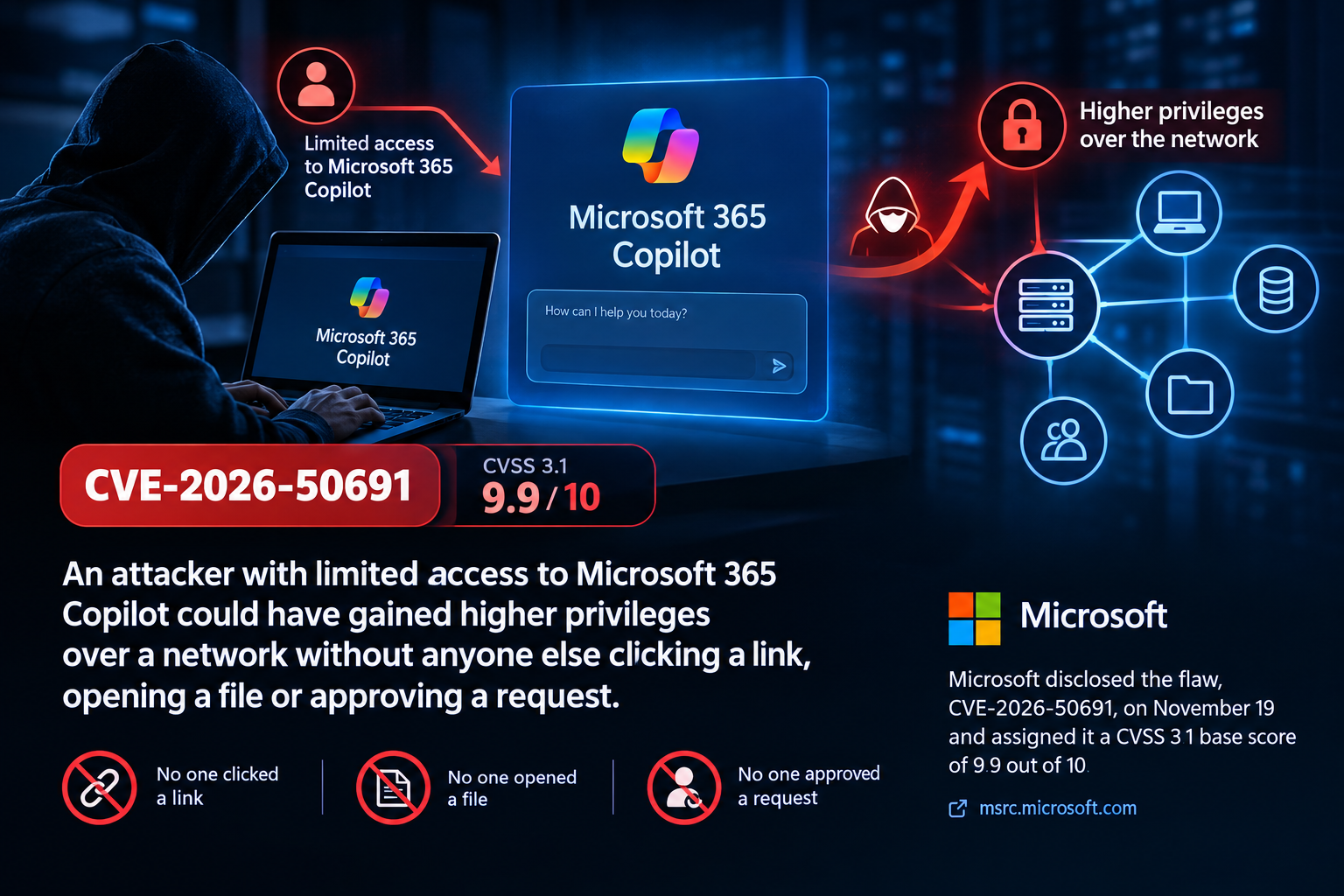
Microsoft disclosed CVE-2026-50691, a critical improper-authorization vulnerability in Microsoft 365 Copilot that could let a low-privilege attacker exceed intended permissions. The flaw received a CVSS score of 9.9, and Microsoft reported no known exploitation at disclosure.
Microsoft fixed the vulnerability in the cloud service, so customers have no patch or configuration change to deploy. Organizations should still review SharePoint permissions and sharing links, since Copilot can surface information that users are already authorized to access, even when access is broader than intended.
An attacker with limited access to Microsoft 365 Copilot could have gained higher privileges over a network without anyone else clicking a link, opening a file or approving a request. Microsoft disclosed the flaw, CVE-2026-50691, on November 19 and assigned it a CVSS 3.1 base score of 9.9 out of 10.
By the time Microsoft published its advisory, it had fixed the vulnerability in the cloud service. Customers have no patch to deploy or configuration to change for this CVE. Microsoft reported no known exploitation at disclosure.
What a low-privilege account could do
Microsoft classified the flaw as improper authorization (CWE-285). An attacker first needed an account with some access to the service. Once signed in, the attacker could use the flaw to exceed the permissions that Copilot should have enforced. Microsoft rated the attack complexity as low. The advisory does not identify the exact privileges an attacker could gain or the resources those privileges would expose.
The severity rating reflects the potential consequences. Microsoft assessed that successful exploitation could expose protected information, allow unauthorized changes or disrupt access to affected resources. It also determined that the impact could extend beyond the vulnerable component’s security boundary.
What the fix means for CISOs
Security teams tracking the CVE can record Microsoft’s service-side fix as the resolution. A separate question for organizations using Copilot is whether the access they have deliberately granted still matches what employees need.
Consider a finance team that stores a confidential forecast on a SharePoint site readable by everyone in the company. An employee who has never visited the site could ask Copilot about the forecast and receive information they already have permission to read. Copilot would be respecting the site’s permissions even though the finance team intended a much smaller audience.
For the next SharePoint access review, ask the owner of a sensitive site who should be able to read its contents. Compare that answer with the groups and sharing links that actually grant access. If the finance team expects ten readers and the site admits the entire workforce, correcting that permission also limits what Copilot can surface.