

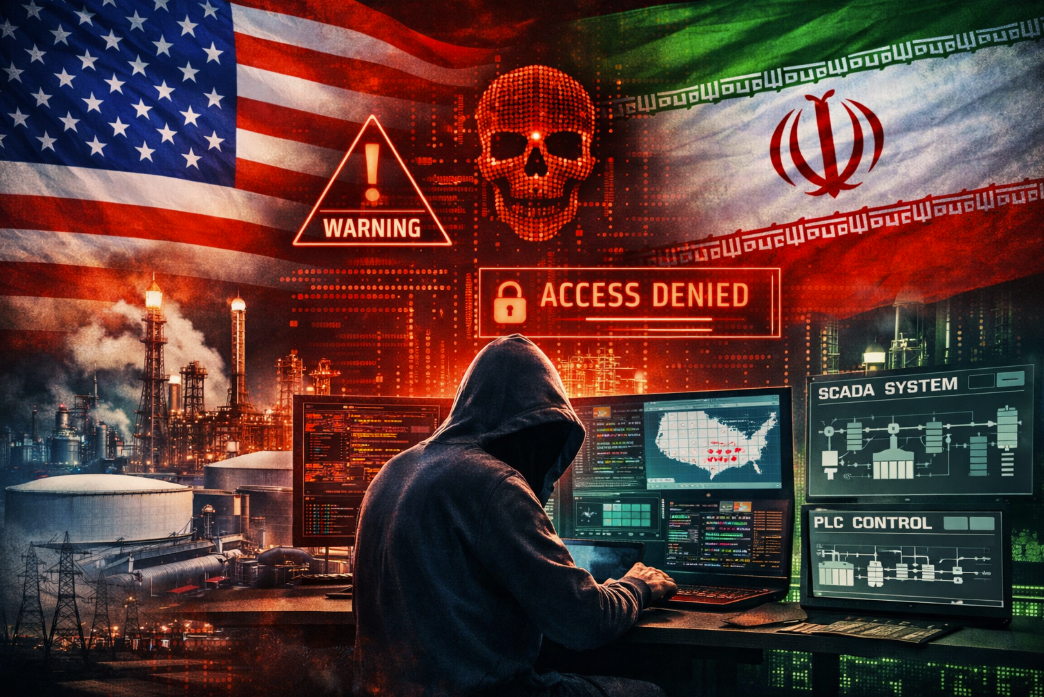
U.S. authorities have issued an urgent warning that Iranian-affiliated cyber operations against American critical infrastructure are accelerating amid the current conflict environment. According to a joint advisory and supporting statements from federal agencies, the activity is not limited to espionage: it is aimed at creating disruptive effects inside the United States. Reuters reported on April 7, 2026, that the campaign has intensified since the start of the war, while U.S. agencies say some victim organizations have already experienced operational disruption and financial loss, as referenced by Reuters.
At the center of the warning are internet-exposed programmable logic controllers, human-machine interfaces, and SCADA-related systems used to operate and monitor industrial processes. These technologies are deeply embedded in critical sectors, including water and wastewater, energy, and government services. U.S. officials say attackers have manipulated display data, interfered with project files, and disrupted the function of PLCs, signaling a shift from opportunistic intrusion toward operational impact.
The water sector appears to be a particular concern. The EPA said U.S. organizations, including drinking water and wastewater systems, are experiencing exploitation and in some cases disruption of commonly used operational technology. The agency warned that cyberattacks on water systems can threaten public health, disrupt treatment processes, damage equipment, and erode public trust. It also noted that reported disruptions have included configuration wiping, software-based mechanical sensor tampering, and HMI disruption.
This is what makes the latest alert strategically important for CISOs and infrastructure operators: the weakness being exploited is often basic exposure. Publicly reachable OT assets remain one of the clearest pathways from geopolitical tension to physical-world consequences. U.S. agencies are urging organizations to remove operational technology from direct internet exposure, review logs for suspicious access, and harden vulnerable environments immediately.
The broader lesson is unmistakable. In modern conflict, cyber operations are no longer a secondary theater. They are a direct instrument of pressure against national resilience. For organizations running industrial environments, this advisory is a reminder that exposed PLCs and poorly segmented OT networks are no longer hypothetical risks. They are active targets in an escalating threat landscape.